


A Shop for Killers Season 2: Twice as Good as the First


Season 2 drops us smack-dab where we left off, so precisely that the opening makes you wonder whether you accidentally clicked on a Season 1 episode. But that’s the trick. The show uses that seamless transition to widen the frame, revealing the broader forces and hidden dynamics that were always operating just out of sight. Once that perspective expands, it becomes clear why this season is sharper, bigger, better, and far more dangerous than before. More often than not, second seasons miss the mark by either playing it safe or stretching themselves too thin.
A Shop for Killers does neither. Instead, it exceeds expectations, delivering a premiere that feels more confident, technically ambitious, and narratively assured than anything in Season 1. The threats are more sophisticated, the world-building is richer, and the action hits with precision that signals the series is leveling up rather than simply continuing. I felt transported into that world every week, and I remained in awe of the writing, directing, action choreography, performances, and overall production.

The biggest change this season is that the show traded some of the relentless survival-thriller energy of Ji-an (Kim Hye Jun) defending the shopping mall for a broader war against Babylon and a deeper exploration of Jin-man’s (Lee Dong Wook) past, his plans, his alliances, and the machinery operating behind everything that happened in Season 1. Where Season 1 was tactical, Season 2 is operational. Season 1 was about surviving the moment; Season 2 is about understanding the larger system, playing the long game, and executing plans that have been in motion for years. It shifts the focus from “What is happening?” to “How do we destroy Babylon?” The narrative fills in gaps from the first season and expands the world through Jin-man’s survival, Babylon’s internal politics, and the broader network of killers and operatives. Some viewers may miss the first season's claustrophobic intensity, but I think the show simply traded one type of tension for another. It was no longer about whether Ji-an could survive the shopping mall; it became about whether Ji-an, Jin-man, and their allies could outmaneuver an organization as corrupt as Babylon.

Season 2 immediately signals its expanded scale by introducing new characters who reshape the tone, deepen the conflict, and raise the stakes. Each addition brings a distinct energy and purpose, making the world feel larger, sharper, and far more volatile than before. Jin Kusanagi, played by Jung Yun Ha, enters the story as a high-ranking executive within Babylon, overseeing the entire East Asia division. Her role places her at the center of Babylon’s operational power, representing an institutional strength capable of mobilizing large-scale resources with precision. Q, played by Kim

Mun, serves as Babylon’s strategic mind, the one responsible for planning, surveillance, and high-level operational coordination. She is not a brute-force attacker; she’s the architect behind Babylon’s moves. Her role expands Season 2's intellectual threat, showing that the danger now comes from both physical force and calculated strategy. J, played by Okada Masaki, is introduced as Babylon’s go-to asset for missions that require unpredictability, psychological pressure, or unorthodox tactics. He embodies volatility, thriving in chaos and weaponizing it. He is Q's younger brother.

One of the greatest improvements over Season 1 is the cast's international expansion. Adding actors from Japan and other countries fundamentally changed the series' texture, bringing a different rhythm, style, and efficiency to the action. J and Q helped make Babylon feel less like a mysterious criminal organization and more like a global institution complete with branches, hierarchy, rivalries, and competing agendas. Babylon no longer felt like a vague plot device; it felt like a machine. Season 2 is also heavier because of the characters' losses. The deaths of teammates, friends, and family members are not simply there for shock value; they reinforce the emotional cost of living in this world. Murthehelp is not just a business—it is a found family held together by loyalty, sacrifice, secrets, and survival.

Another aspect this season expands on, giving us a clearer understanding, is Murthehelp, one of the season's most important revelations, exposing the hidden infrastructure that supported Jin-man’s life as an operative. It isn’t a gang or a mercenary outfit; it’s a covert service network Jin-man built from the ground up to help assassins survive outside Babylon’s control. It provides everything Babylon monopolizes: intelligence, weapons, logistics, medical support, extraction routes, and encrypted communication without demanding loyalty or obedience. Jin-man created it as both a counterweight to Babylon’s growing dominance and a safeguard for the people he cared about, especially Ji-an. In Season 2, Murthehelp becomes key to understanding Jin-man’s foresight: he knew Babylon would eventually come for him, so he designed a parallel system to protect defectors, disrupt Babylon’s operations, and keep Ji-an alive long after he was gone. Its introduction broadens the drama's world, revealing that the conflict was no longer just personal, but structural—a clash between Babylon’s hierarchy and Jin-man’s quiet rebellion.

Some elements of the first season remain, but Ji-an stays the emotional center of the series, and her arc is compelling because she no longer merely reacts. In Season 1, she was being hunted; in Season 2, she begins making choices. More importantly, she begins to understand that Jin-man’s world does not operate by normal rules. At the start of the season, part of her still wants to distance herself from that world, holding onto a desire for reason, compromise, and negotiation. Episodes 5 and 6 become particularly important because her attempts to reason with Jin Kusanagi make it painfully clear that idealism and playing by the book don't work in a world built on manipulation, violence, and power. Kusanagi views compromise as weakness and every attempt at good faith as leverage to exploit. Ji-an’s journey works because she does not lose her humanity. She does not suddenly become cold or cruel; instead, she begins to understand what Jin-man understood long ago: survival depends on preparation, strategy, and understanding exactly who you are dealing with. By the finale, she is no longer just trying to escape her uncle’s shadow—she understands why that shadow existed in the first place. She is not becoming Jin-man, but she is beginning to inherit the part of him that knew how to survive.

Lee Dong-wook once again carries the show effortlessly. He remains charismatic, controlled, believable as a strategist, and convincing as someone who can be both deeply protective and absolutely terrifying. One of Season 2's smartest moves is how it reframes Season 1. Many things that initially seemed sudden or chaotic are revealed to be pieces of a much larger operation against Babylon. Jin-man remains fascinating because he genuinely loves Ji-an while routinely manipulating information “for her own good.” He is loving but secretive, protective but controlling. He does not protect like an ordinary uncle; he protects like an operative. Every lesson, hidden rule, warning, contingency plan, safe route, ally, and backup system was built around a single objective: keeping Ji-an alive.
The most moving aspect of the season for me was realizing just how much preparation went into that protection. The yellow ribbons tied around the trees. The escape vehicle. The routes through the woods. The fallback plans. The hidden structures. The people positioned in the right places. The planning surrounding the shopping mall. When Ji-an had to destroy the shopping mall and escape, those yellow ribbons weren't just markers—they proved someone had imagined the worst-case scenario and built a path through it for her. The escape vehicle wasn't just transportation; it was preparation, foresight, and love expressed through action. In a show filled with assassins, betrayal, weapons, and death, those details became some of the clearest expressions of affection. Jin-man may struggle to express love directly, but he built an entire infrastructure around Ji-an’s survival.

Many of the characters we loved in the first season returned, which was refreshing, especially since I was very attached to them. Pasin, So Min-hye, Brother, and even Bale continued to provide continuity while expanding Babylon's mythology and the mercenary world. Pasin’s storyline becomes one of the clearest examples of how the show plays with loyalty, betrayal, and misdirection. When it first appeared that he had betrayed everyone, I found it difficult to believe because this series thrives on incomplete information and false assumptions. What looks like betrayal is not always betrayal; sometimes it is coercion, strategy, sacrifice, or someone trying to protect the people they love. Babylon understands this. The organization doesn't just attack people physically—it attacks relationships, weaponizing family, grief, loyalty, and fear. Throughout the season, people are manipulated, betrayed, pressured into impossible choices, and forced to question those closest to them.
It was deeply refreshing to see the people around Ji-an and Jin-man not fight simply because they are paid

to. Many of them fight because they believe in someone, which makes every loss hurt more. Every death is both a personal wound and a strategic loss; every betrayal carries emotional damage and operational consequences. The final episode perfectly demonstrates why I keep describing this season as operational: it is not one giant fight, but a chain of strategies. Kusanagi believes she has finally gained the upper hand through Jin-man’s biometric information and Murthehelp’s data. On the surface, it looks like she has won. In reality, Ji-an and Jin-man are turning that advantage into a trap. While Kusanagi believes she is hunting Murthehelp, she gradually becomes the target herself.
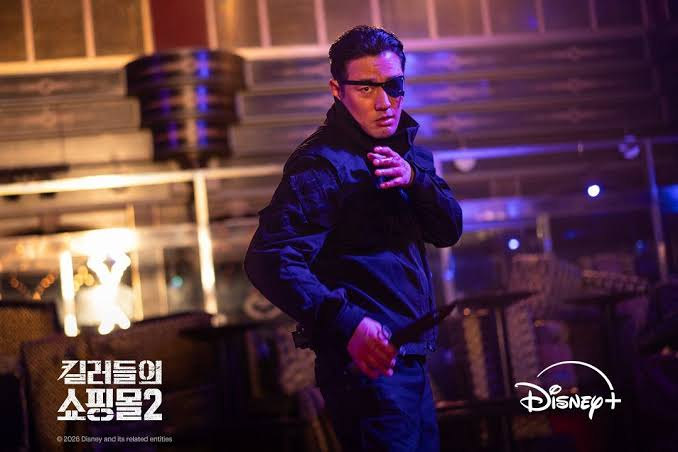
Bale, on the other hand, remained one of the franchise's most memorable characters. He is pure chaos, which made him fascinating, especially because he functioned as Jin-man’s dark mirror. Both were lethal operators, but while Jin-man treated violence as a necessity, Bale treated it as entertainment. He was unpredictable, genuinely dangerous, and had a screen presence that elevated every scene. I was genuinely disappointed to see him eliminated so early, even though I understand why. His fate reinforced another major theme of the season: Babylon uses people until they become inconvenient. Still, Bale’s absence was felt. He brought a level of danger Kusanagi never matched because Bale didn't need the story to keep telling us he was dangerous—his presence made us feel it.

Of the new additions, J and Q stood out immediately. J brought unpredictability and a completely different energy, helping make Babylon feel like a much larger organization with varied branches and operational styles. Q, on the other hand, commanded attention immediately, carrying herself like someone used to control, execution, and discipline without ever needing to be loud to feel dangerous. The chemistry between J and Q gave their storyline emotional weight, but I didn't fully appreciate how important Q would become until she experienced loss, which became one of Babylon's emotional weapons against her. Kusanagi manipulates Q’s grief and directs her anger at Jin-man, offering one of the best examples of how Babylon operates: its greatest weapons aren't always guns or assassins, but lies, misinformation, and grief pointed in the wrong direction.

I completely understood why Q initially accepted the story she was given, as she was grieving and wanted someone to blame. However, some of the season's strongest moments come when she finally realizes she was never truly Kusanagi’s partner. Deep down, I think she already knew it; her grief simply prevented her from accepting that she was just an asset whose loyalty, trust, and sorrow were being exploited. Once that truth is exposed, Babylon begins losing control of one of its own weapons. Q’s eventual alignment with Jin-man is satisfying because it never feels sentimental. They don't suddenly become friends; they simply recognize the real enemy in front of them. Q’s storyline highlights Babylon’s greatest weakness: it can create fear, obedience, ambition, and dependence, but it cannot create genuine loyalty. Where Babylon uses people, Jin-man prepares and protects them. That distinction ultimately becomes one of the reasons Babylon starts falling apart.

When Kusanagi is first introduced, we are led to believe she is a precision-driven enforcer who doesn’t waste movement or emotion, showcasing how the assassin world had evolved to become faster, cleaner, and far more dangerous. Unfortunately, Kusanagi never really meets that bar for me. I understood what the writers were aiming for; she was clearly meant to be a master manipulator and a major antagonist within Babylon’s hierarchy—but she fell flat. She was annoying rather than intimidating, and she stands out as one of the very few K-drama characters I have genuinely disliked in nearly a decade of watching dramas. Every scene involving her felt more frustrating than tense, largely because she rarely seemed competent enough for her position. She possessed all the arrogance of a mastermind without the presence, effectiveness, or menace to back it up, and her screaming outbursts and eccentric mannerisms often felt irritating rather than threatening. Often, disliking a character shows a strong performance, but that wasn't the case here. I didn't dislike Kusanagi because she was a great villain; I disliked her because I genuinely did not enjoy her.

The finale’s use of misdirection, particularly the heat-signature deception involving the mannequins and lamps, is exactly the kind of detail that made this season so rewarding. It wasn't simply a clever trick; it proved that Ji-an and her allies were no longer reacting, but actively shaping the battlefield, manipulating information, baiting reactions, and exploiting assumptions. Earlier in the season, Ji-an tried to reason with Kusanagi. By the finale, she understands that Kusanagi only responds to leverage, power, exposure, and consequences. By the end of the season, Babylon feels both larger and more vulnerable as the series reveals the cracks beneath its power: its leaders lie to one another, its operatives are disposable, and its hierarchy breeds ambition and arrogance. Jin-man and Ji-an don't start defeating Babylon because they are physically stronger; they begin defeating it because they understand it. They exploit its weaknesses, expose its lies, turn information into a weapon, and rely on relationships Babylon will never truly comprehend. That is why Q’s storyline matters so much—she represents Babylon losing control of its own people. Once the truth emerges, Kusanagi’s manipulation collapses, and Babylon’s internal rot becomes part of its downfall.

Season 1 was tighter and arguably more original, built on a simple, nearly perfect premise: surviving the night. Season 2 is bigger, messier, and far more ambitious. It isn't always suspenseful, and the pacing occasionally suffers under the weight of its expanding mythology and politics, but I still loved it. If you watched Season 1 primarily for Ji-an’s fight for survival, Season 2 may feel less focused. But if you were fascinated by Jin-man, Babylon, Bale, Murthehelp, and the larger world surrounding the shopping mall, this season delivers exactly what you want.

For me, this season is less about the inconceivable acts these people commit and more about the machine that created them, and, more importantly, about the network built to protect one person from that machine. The yellow ribbons, escape vehicle, hidden plans, alliances, safe routes, and sacrifices all lead back to the same idea: everything was built to keep Ji-an alive.
Season 1 was about Ji-an surviving the world Jin-man left behind; Season 2 was about understanding, inheriting, and eventually commanding that world. She

is no longer simply the girl in danger. She is becoming someone Babylon may one day regret underestimating. Season 1 may remain the tighter thriller, but Season 2 is richer, larger, and more ambitious. It explores loyalty, sacrifice, grief, manipulation, truth, and family.
For all the assassins, mercenaries, betrayals, deaths, and hidden agendas, A Shop for Killers remains, at its heart, a story about family. Season 2 simply broadened the battlefield enough for us to see how far people
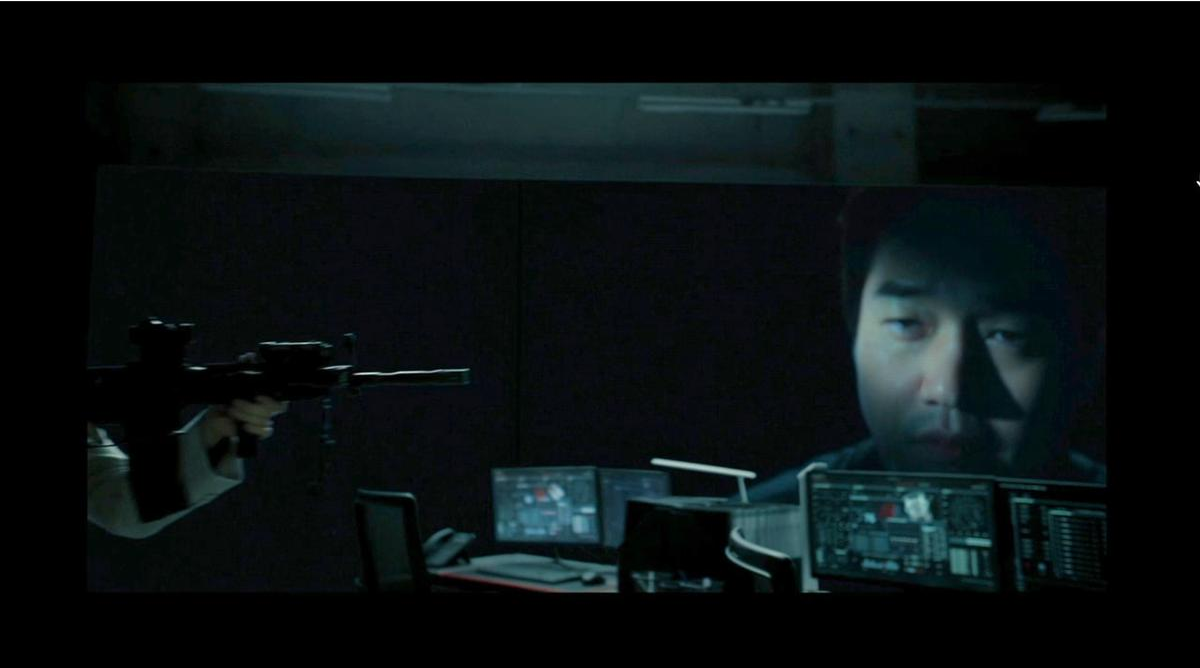
would go to protect it. That final confrontation with Chen (played by Yoo Ji‑tae), Babylon’s ultimate leader, becomes the moment when every thread converges. The forced ceasefire, Jin‑man and Ji‑an walking away with the stolen server as leverage, and the quiet shift in power dynamics all signal a new phase not just with Babylon but also between Jin‑man and Ji‑an. That last moment, Jin‑man turning to Ji‑an and asking what her next move was, is more than a closing beat; it’s a deliberate handover, a recognition that she is no longer just surviving his world but shaping it. It’s the clearest allusion to a third season, and I simply cannot wait. You can watch Season 2 of A Shop for Killers here.


Comments