


The Lament of Autumn Episodes 13-18 Review: When the Heart Becomes a Battlefield


As The Lament of Autumn enters its middle act, the drama shifts from a story of romantic pursuit and emotional misunderstandings to something far grander. Political tensions are escalating across the country, military alliances are beginning to fracture, and the looming threat of war casts a shadow over every relationship. Yet despite the focus on armies, power struggles, and battlefield strategy, these episodes' true strength lies in their exploration of human vulnerability. Episodes 13 through 17 ultimately focus on people reaching their breaking points. Some are broken by political ambitions. Some by pride. Some by impossible circumstances. And some by love. What makes this stretch of episodes so compelling is that the personal and political stories become inseparable. As the nation edges closer to war, Chang Xuan and Ping Jin Jun head toward emotional collisions neither is prepared to handle. By the end of Episode 17, the rules governing their relationship have fundamentally changed, setting the stage for a very different story moving forward. My thoughts:

Episode 13 sets out the argument the whole arc will test. In the car after Xueting's arrest, Ping Jun tells Changxuan she wants love built on equality, respect, and devotion. He tells her only power and status keep people safe. What I appreciate is that the drama doesn't let either of them be completely right. Changxuan's belief in power is clearly what's hurting her. He's why she's turning a hairpin into her own throat. But Xueting, the man who represents her ideals, has been taking dangerous risks without ever telling her. When he's arrested, he doesn't deny anything. He just apologizes. So the episode quietly shows that neither man is actually offering her the love she describes. One controls her. The other keeps her in the dark. This is also one of the hardest episodes to sit through. The forced kiss in the car isn't framed as romance, and I'm glad the drama lets Ping Jun's fear be real. But it does mean the episode leans heavily on our patience with Changxuan. The only thing keeping him from being unwatchable is the small hesitation he shows when she threatens herself. It's the first sign that there's something in him that can be stopped.

Another aspect that caught my attention was Kuang Bingwen's subplot. From the beginning, the drama hints that he and his foster sister, Chen Wanqiao, have built their whole lives around avenging their parents. His marriage to Yu Jinxuan, Changxuan's sister, and her becoming Yu Zhongquan's third concubine only complicate that revenge plot. But revenge is a double-edged sword. We see him develop feelings for his wife, which nicely echoes the central story. In this world, love keeps getting in the way of the things people think they want most. I'm not sure how much longer he can keep his desire for revenge at bay, though.

Episode 14 is about the emptiness of getting exactly what one demands. Ping Jun gives in to Changxuan's threats, but he can't bring himself to go through with it. That's the most important beat in the episode for me. He forced the bargain, but her compliance gives him nothing. For the first time, his power gets him the outcome, but not what he actually wanted. I really like that the drama shows Changxuan's contradictions without explaining them. He throws her ring into a lake out of jealousy, then brings her childhood dumplings out of genuine tenderness, then loses control again the moment the ring reappears.
It's exhausting to watch, but I think that's the point. He doesn't know how to love someone without owning them, and the episode ends with him asking himself what he's doing. But Ping Jun is just as contradictory. She vows to hate him forever, yet he catches her off guard by remembering her favorite childhood food, and she clings to Xueting's ring as if holding on to it could keep her feelings from shifting. Changxuan's flaw is demanding affection he hasn't earned. Ping Jun's may be refusing to admit to affection that is already there. That question is the turning point of the whole arc, and I wish the drama had let it sit longer.


Episode 15 is where the drama's cruelty and tenderness collide most painfully. Changxuan does the most selfless thing we've seen from him: he risks his life to save Ping Jun's mother. And then, when Ping Jun believes he killed Xueting, he lets her believe it. He'd rather be hated than admit he cares. That says everything about where he is emotionally. Vulnerability frightens him more than a loaded gun. The empty-gun scene is one of the series' strongest moments so far. It's tense, cruel, and heartbreaking, and it shows both of them at their most desperate. What frustrated me, in a good way, is how much of his goodness happens out of her sight. The crash. The kneeling before his father. Ping Jun knows none of it. The drama builds dramatic irony that hurts to watch because she judges him by the worst he shows her, while the best of him remains hidden. But the episode doesn't let him off the hook. After everything, he still changes the deal from one year to a lifetime. His good deeds don't erase the coercion. They just make it more tragic. Ping Jun accepting it as a debt from a past life is devastating. She isn't choosing him. She's giving up.

Episode 16 is the emotional center of this arc, and it's where Changxuan finally breaks. The fact that he never anticipates Ping Jun's actions speaks to how deeply his feelings are tied to his belief system, his environment, and how he was raised. More importantly, it highlights his inability to understand how desperation works in people who have so much more to lose than money and power. So his failure to see her suicide attempt coming makes complete sense.
Ping Jun's suicide attempt after the fireworks is incredibly difficult to watch. I appreciate that the drama doesn't make it about Xueting. Ping Jun isn't dying for another man. She's trying to escape a life she never chose. And that's exactly what Changxuan can't fight. All his life, he's believed he can buy, threaten, negotiate, or force anything. This can't. He understands, maybe for the first time, that his love has become a cage. I think this is the moment he truly breaks. The realization that she would rather die with

another man's love in her heart than be with him makes him literally open the cage and let her go. It's the most important decision he makes in the series so far because it's the first time he puts her freedom ahead of his own desires. It isn't redemption. He's still the man who helped create this situation. But it's the first honest step. It works because it costs him everything. He doesn't let her go nobly. He lets her go broken. Then he runs toward the one place where his pain has a purpose: the war. Choosing war creates distance between him and Ping Jun, but it also clearly signals who Changxuan is becoming.
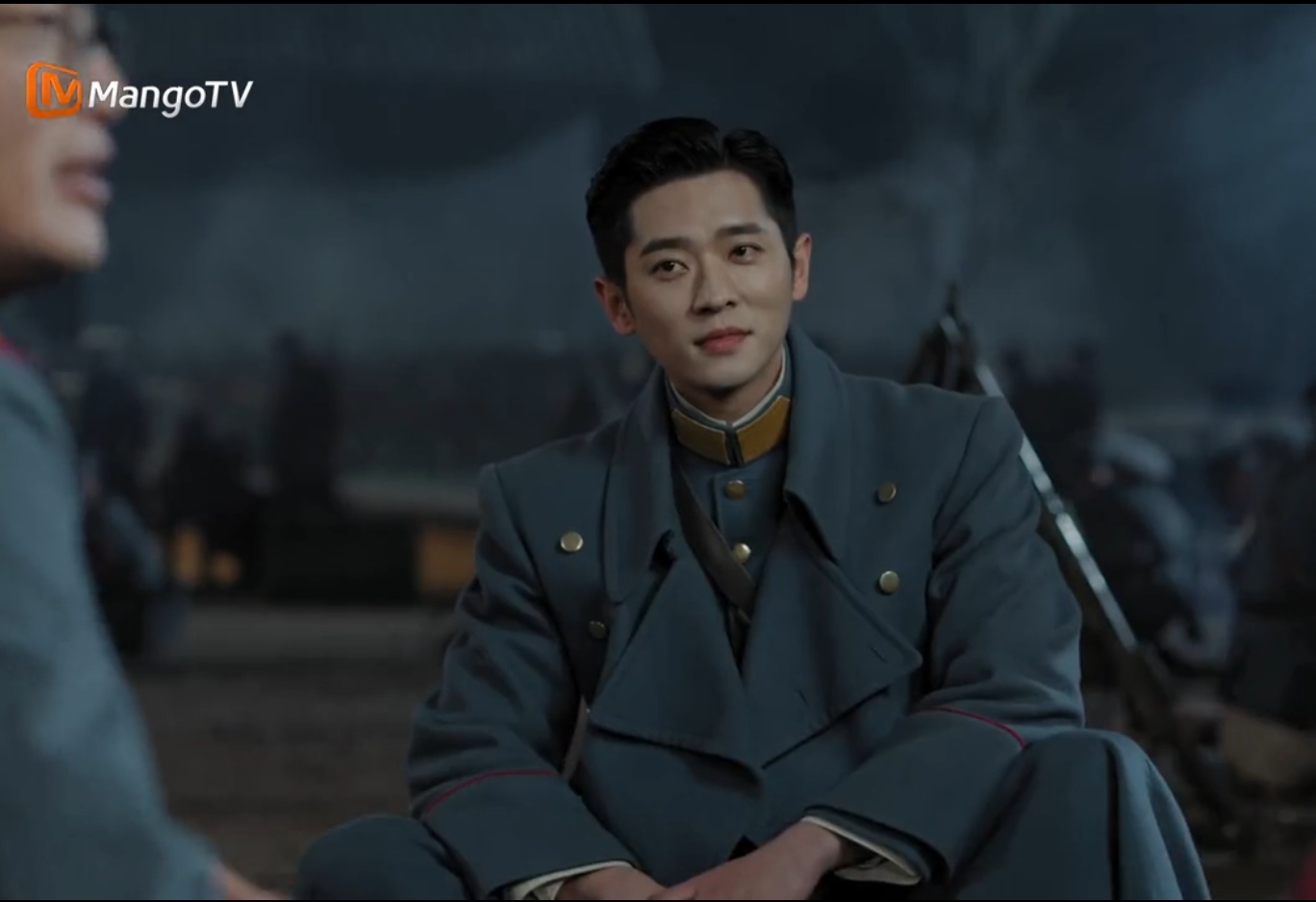
For the first time in his life, he finds himself in a place where power carries responsibility rather than privilege. We see this quite clearly in episode 17. The battlefield gives him something Ping Jun never could: clarity. It gives him a mission, a purpose, and a brotherhood built on something other than status. Among the soldiers, he finds camaraderie he's never truly experienced. These are men who don't follow him because of his family name. They follow him because he's willing to stand with them, eat with them, and ultimately risk his life alongside them. Finally, he begins using his power to protect people who cannot protect themselves. The timing of Li Boren's revelation, telling Ping Jun the truth about Changxuan and everything he had done for her right as he was leaving for war, was probably for the best, in the most dramatic way.

For me, Episode 17 is where Changxuan's arc truly grows, and it's the best episode of this stretch. I want to be clear about one thing first. War is nothing admirable, and I'm grateful the drama doesn't pretend otherwise. The weapons are junk, the soldiers are hungry, and men who have already been abused by their own officers are sent to die. It never looks glorious. But war changes people. Sometimes for the worse. Sometimes, painfully, for the better. What I find powerful is how the drama mirrors Changxuan's past behavior. In Episode 14, he learned Ping Jun's favorite food to win her over. Now he learns his soldiers' dreams, not because they matter, but because they do. When they say they'd eat moldy buns for him, he isn't proud. He's ashamed. That shame is where his growth begins.

During that meal, I saw in Changxuan a realization of how different life is for ordinary people. He grew up in the Yu mansion, where food, safety, and comfort were never in question. For these men, a moldy bun is a meal worth being grateful for. I think this is the first time he truly understands what Ping Jun has been trying to tell him since they met: they see the world differently because they live in different worlds. She has said it in many ways. She rejected his gifts. She pushed back against his belief that power could fix everything.

In Episode 13, she told him plainly that they came from different worlds. Every time, he dismissed it. He believed power and status could protect anyone and that what she wanted was naive. Sitting with his soldiers, he finally sees the world through the eyes of people who have never had either. He realizes Ping Jun wasn't being naive. She described a life he had never lived. These moments matter so much to Changxuan because, for the first time, he earns loyalty instead of demanding it. By standing up for his soldiers, sharing their hardships,
and carrying their burdens, he becomes the kind of leader they choose to follow. In the process, he also begins to understand the woman he let go. Another thing this episode made me appreciate is how unavoidable sacrifice becomes in times of war. It finds everyone. A soldier charges into gunfire so his commander can live. Ping Jun gives up her pride and nearly her life. Changxuan gives up the only thing he truly wants. None of it is fair, and most of it goes unseen by the people it's meant for. That hurt.

I must say, Xueting's storyline blindsided me. Not the bitterness. That rang true and was entirely expected after discovering what Ping Jun endured to secure his release. A proud man struggling to accept that the woman he loves saved him is believable. The revelation of his secret relationship, however, genuinely surprised me. I mean, it makes sense. He was away for four years. But it also felt a bit convenient, as though the drama is clearing the path for Changxuan rather than letting Ping Jun's choice stay truly difficult. I'd rather

the drama trust its central conflict without making the other man worse. Episodes 13 through 17 are the strongest stretch of The Lament of Autumn so far because the drama doesn't excuse Changxuan, and it doesn't give up on him either. His coercion is real, and the series shows the damage it causes. What finally changes him isn't victory but powerlessness. For the first time, he can't take anything by force. The irony is heartbreaking. The man Ping Jun chose for equality and respect gives her neither. The man she ran from is far away, becoming the man she once said he could be. The war didn't make Changxuan good. Losing her did. The war is just where he proved it.

Episode 18 is easily the most grounded and emotionally exhausting hour of the drama. The war scenes are gruesome. Watching them triggers genuine unease; the shifting sands between Yu Changxuan and Ye Pingjun, combined with the heavy fallout of a year-long military campaign, leave an inescapable cloud of dread hanging over the narrative. It is a stark examination of the trauma of loss and the devastating consequences of structural betrayal. The episode's emotional pivot confronts the brutal realities of the frontline. Changxuan entered this conflict as a wealthy young man armed with rigid upper-class convictions, believing his power and status could control the battlefield. He returns completely altered by a tragic lesson: money and power don't make a person, and they can't protect life when an entire system decays from within.

The horrifying reality of a small battalion being decimated because of defective weapons and leaked coordinates serves as an unprompted wake-up call. Betrayal from within the military leaves a profound mark on Changxuan's soul. Coming home as a highly praised war hero, receiving promotions, and collecting empty accolades do nothing to erase the lingering scars of war and catastrophic loss. It is a necessary lesson in his character growth, but one that comes at an

unacceptably high human cost. The narrative strongly validates the growing fear that Kuang Bingwen is the real enemy operating within both the military ranks and the Yu family home. His incredibly violent and unhinged reaction to overhearing a couple of ordinary soldiers badmouthing him proves he is a ticking time bomb. Driven by anger, deep-seated hurt, and overwhelming hatred, Bingwen's severe lack of emotional control positions him perfectly as a volatile saboteur capable of almost anything. His love for Changxuan's sister is clear, but whether it's strong enough to dissuade him from pursuing revenge remains to be seen. Only time will tell.

Amid the grand-scale tragedy of military corruption, the domestic dynamics at the Yu estate provide a vital emotional anchor. Changxuan's mother, brilliantly portrayed by Xu Fan, is easily one of the series' standout characters. Her patient communication style, fierce determination to keep her son safe, and ability to balance her children's and husband's needs cement her as the glue holding the family together.

Watching the household dynamic shift upon Changxuan's victorious return is incredibly rewarding. His strict father finally offering validation and respect grants Changxuan a brief sense of feeling loved and, perhaps more importantly, chosen. It is a poignant moment that highlights the tragedy of his upbringing: he had to survive an entire war before earning the acknowledgment he had spent a lifetime seeking from his father. The scene is particularly compelling because it feels less like a resolution and more

like the start of a new chapter in their relationship. The wounds between father and son run too deep to disappear overnight. Years of feeling overlooked, inferior to his brother, and unwanted cannot be healed by a few words of praise. Yet for the first time, Yu Zhongquan seems to truly see the son standing before him rather than the disappointment he had convinced himself he was. Likewise, Changxuan finally receives the recognition he has spent his entire life chasing. Whether that is enough to fully mend their relationship remains to be seen, but it does create the possibility of something that never existed before: mutual understanding. The tragedy is that it took war, sacrifice, and the threat of losing him for his father to recognize the value that had been there all along.

I knew the dynamic between Changxuan and Pingjun would change once he walked away from her. What I wasn't sure I would appreciate was the shift in Pingjun after learning about the silent sacrifices he made behind the scenes to secure her mother's medical treatment and reduce her boyfriend's prison sentence. I understood Pingjun's remorse, newfound clarity, and desire to apologize. At the same time, I understood Changxuan's coldness toward her, even if only temporarily. The old Changxuan never would have done this. Yet it feels entirely justified. His cold dismissal is the reaction of a traumatized man masking deep emotional wounds behind a wall of ice. His refusal to even look at her draws a devastatingly clear line that speaks volumes about how deeply he is still hurting.

What makes the moment so powerful is that, for the first time, Changxuan asks her for nothing. He isn't demanding her attention, her gratitude, her affection, or even an explanation. The man who once inserted himself into every aspect of her life has finally stepped back. That restraint carries a sadness because it comes only after he has convinced himself there is nothing left worth fighting for. In many ways, this is the first truly selfless thing he has done for her. He gives her the freedom she always claimed to want, even though it clearly breaks his heart. At the same time, Pingjun is forced to confront a version of Changxuan she has never had to face before. She has spent so long pushing him away that she never considered what life would look like if he actually stopped coming back. The reality of his absence, coupled with the truth about everything he quietly sacrificed for her, hits far harder than his pursuit ever did. Their encounter is painful precisely because both of them finally understand something they couldn't see before, but that understanding arrives far too late to spare either of them the hurt.

The standout moment of the episode for me was when Jin said to Changxuan, "People who just come back from the battlefield mostly have a murderous look in their eyes, but in your eyes, I see compassion. An iron fist can forge a fierce general, but only benevolence and righteousness can make a good general who protects the people and brings peace to the world." Changxuan really needed to hear those words. The war has undeniably changed Changxuan for the better. This

moment is so powerful because it validates the transformation we have been watching unfold since Episode 16. The young man who once believed power could solve everything has begun to understand responsibility, sacrifice, and service. This interaction also left me deeply curious about Jin. What do we actually know about him beyond the fact that he owns the Xiangxi Hotel? His understanding of Changxuan feels rooted in experience rather than observation alone. Now I'm completely invested in learning his backstory. Watch episodes 13-17 here.


Comments